20th May 2026
Wellbeing for forensic science practitioners
Read more


The wellbeing of forensic practitioners is vital. The FCN is exploring methods to understand the current wellbeing status and issues within our forensic community. We want to help identify gaps in existing wellbeing support and good practice within forces, and make recommendations for change to enhance wellbeing of forensic practitioners.
Wellbeing Toolkit
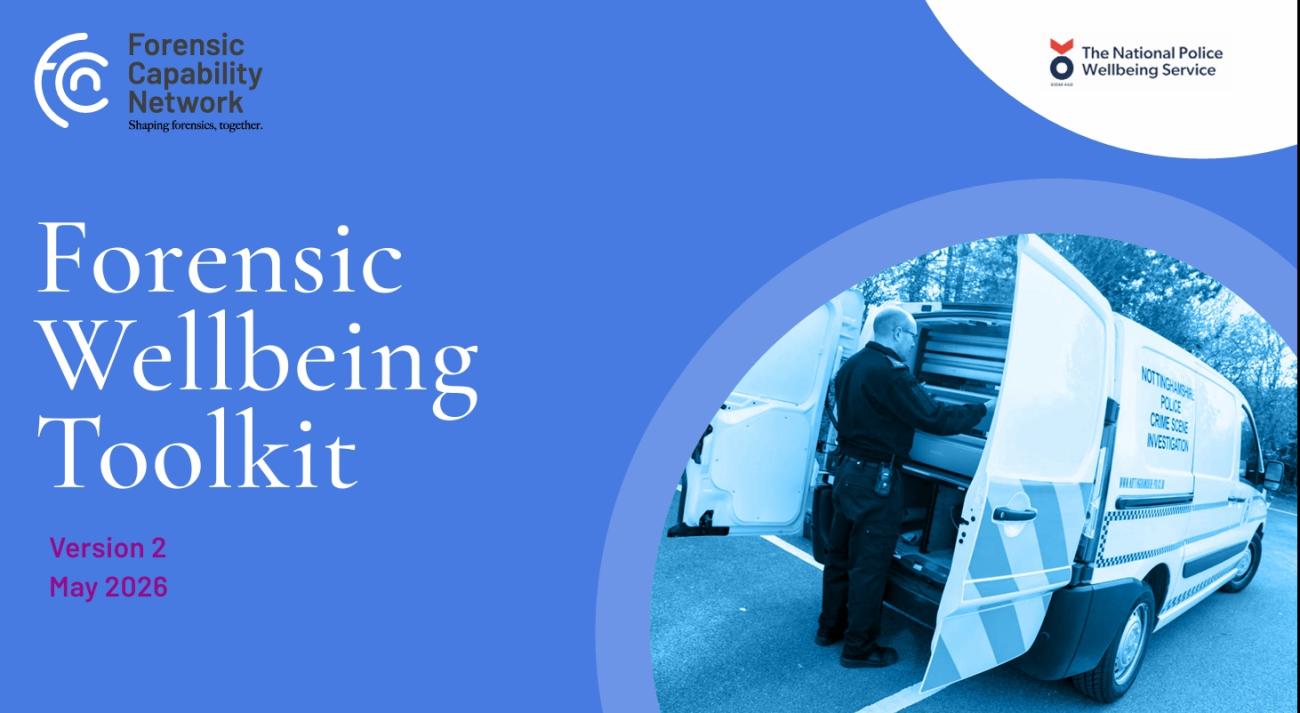
Whether you work in digital, physical, or laboratory forensics, and regardless of role or rank, the Forensic Wellbeing Toolkit has been designed to help you access the latest wellbeing resources, guidance, and support available to the forensic community.
Developed by the Forensic Capability Network (FCN) in partnership with Oscar Kilo on behalf of the National Police Chiefs' Council (NPCC), the toolkit brings together a range of wellbeing information in a single, accessible location that is easy to find, navigate, share, and use.
Published in April 2026, the toolkit aims to support the health, wellbeing, and resilience of forensic practitioners across policing and beyond.
Key benefits:
Download now - FCN Wellbeing Toolkit | FCN
To access previous research, news and webinars about wellbeing in forensics and policing, take a look through our resources below.
The hidden cost of the night shift and how to sleep it off - BBC News - An interesting recent news article about the importance of sleep and the impact of night work.
The 24/7 Mental Health Crisis Line is an independent and confidential service for anyone working in policing, experiencing a mental health crisis or suicidal thoughts.
If you’re in crisis, and need help now, call 0300 131 2789
In 2025 the FCN attended the CYCLOPES Practitioners’ Workshop on the Wellbeing of Digital Forensic Investigators (DFIs)’, and the "Empowering Practice, Enhancing Prevention" workshop co-organised by the 2PS and CYCLOPES projects. These workshops facilitated a vital and timely discussion on how we support those operating in some of the most challenging and emotionally demanding roles in law enforcement.
DFIs face ongoing exposure to traumatic content, high operational pressures, and often work within organisational settings where structured wellbeing support is limited or inconsistent. This workshop provided a collaborative space to confront these realities and explore actionable solutions.
Key insights from the discussion:
These events brought together law enforcement practitioners, mental health professionals, and researchers who shared insights, experiences, and practical recommendations. FCN presented on the results of the forensic practitioner wellbeing survey.
These workshops marked an important step toward building a more resilient, trauma-informed digital forensic workforce across Europe.
Research Study: Experiences of Forensic Practitioners During Pregnancy, Maternity Leave, and Return to Work
We are inviting participants to take part in a research study exploring the experiences of forensic practitioners during pregnancy, maternity leave, and return to work within the UK forensic science sector.
Are you:
If so, we would welcome your participation in this important study.
This research aims to better understand workplace experiences, practices, and support relating to pregnancy and maternity within forensic science. Your insights will help inform future policies, workplace practices, and interventions to support women and pregnant people working in forensic practice.
What does participation involve?
Participation is entirely voluntary, and all survey responses are anonymous.
If you are interested in taking part, please follow the survey link below: include link to survey here once on Jisc
If you would like more information, please contact mary.makinde@canterbury.ac.uk or SEForensicNetwork@canterbury.ac.uk
20th May 2026
13th June 2025
3rd April 2025
3rd April 2025